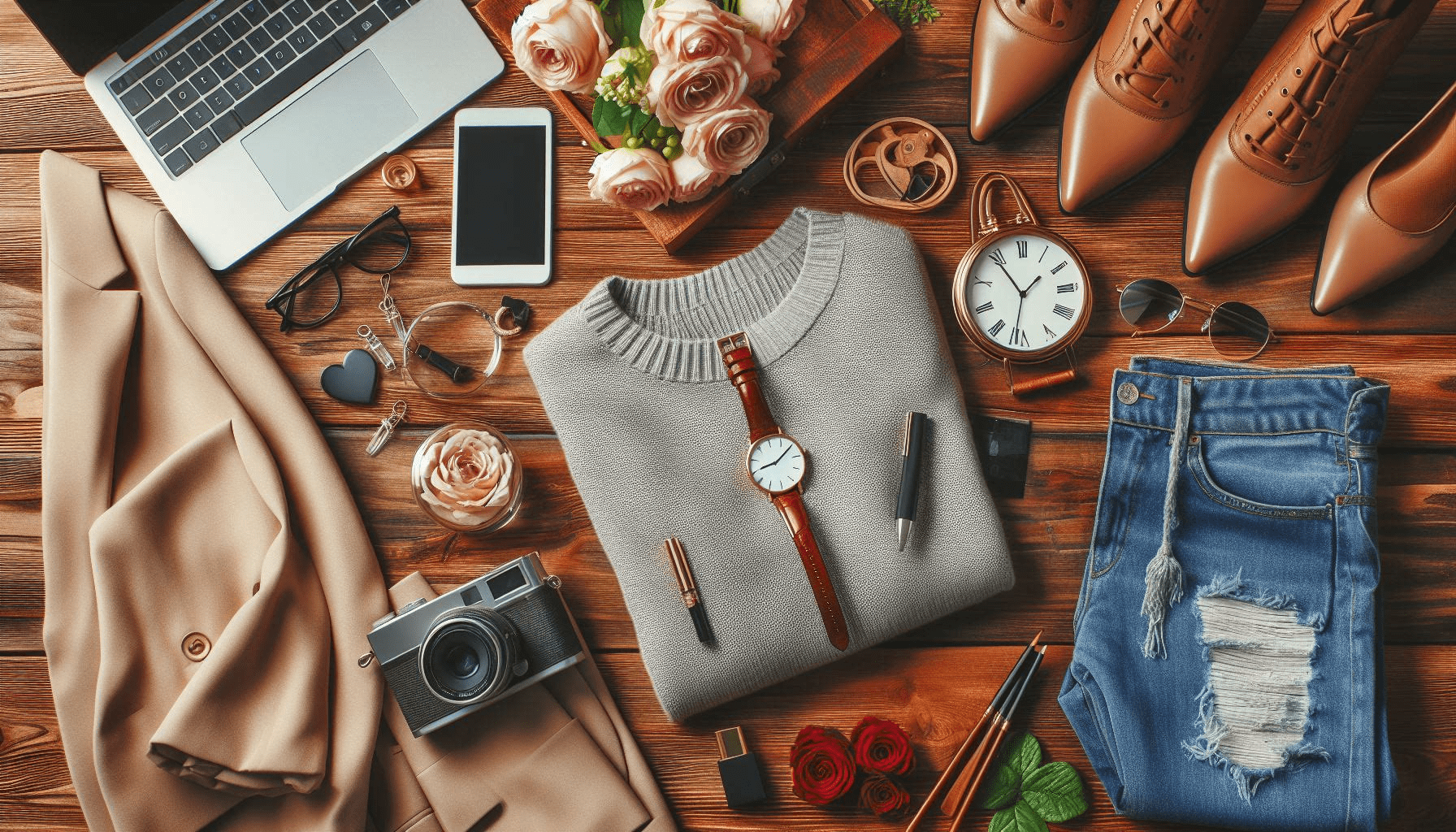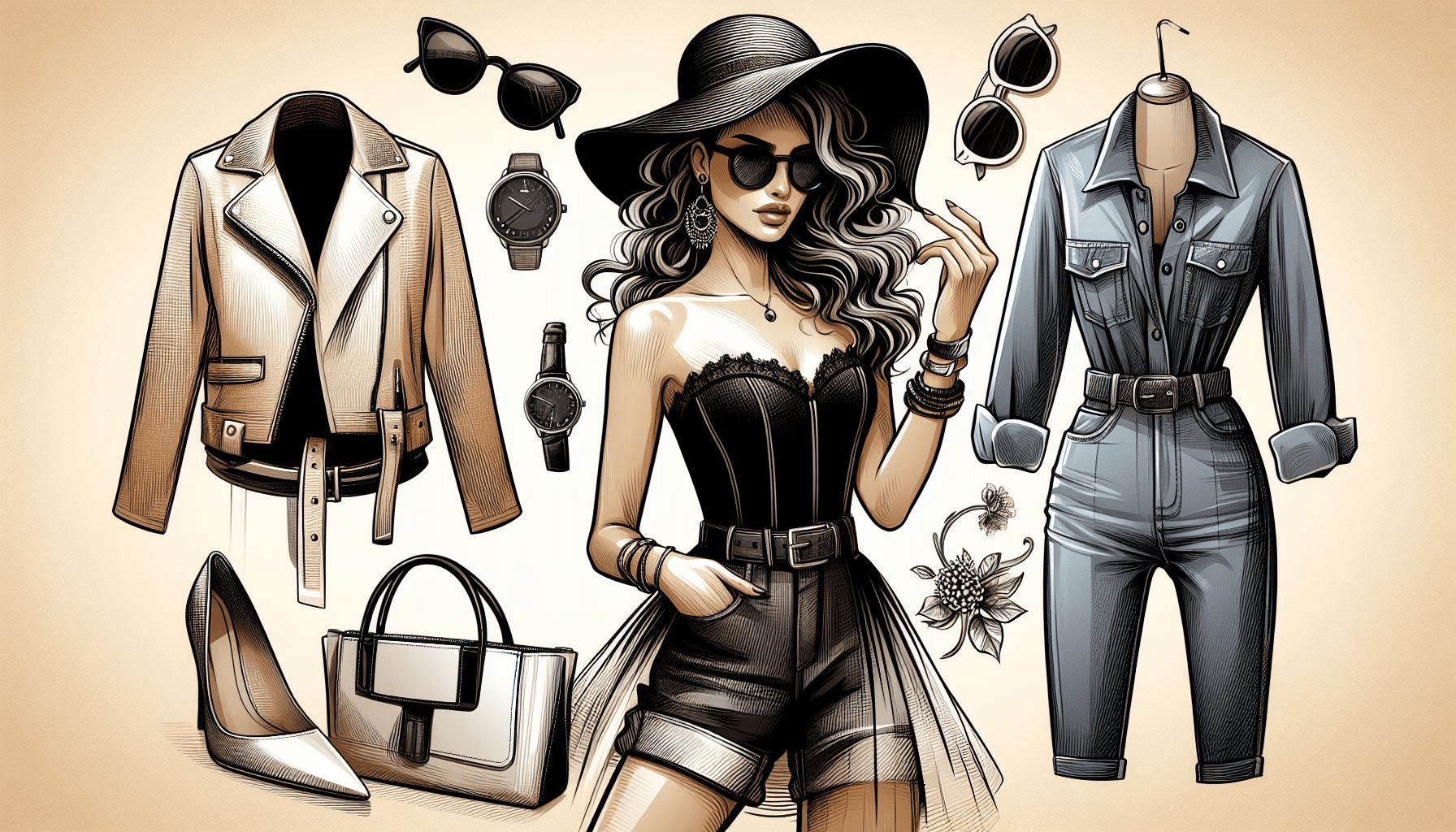


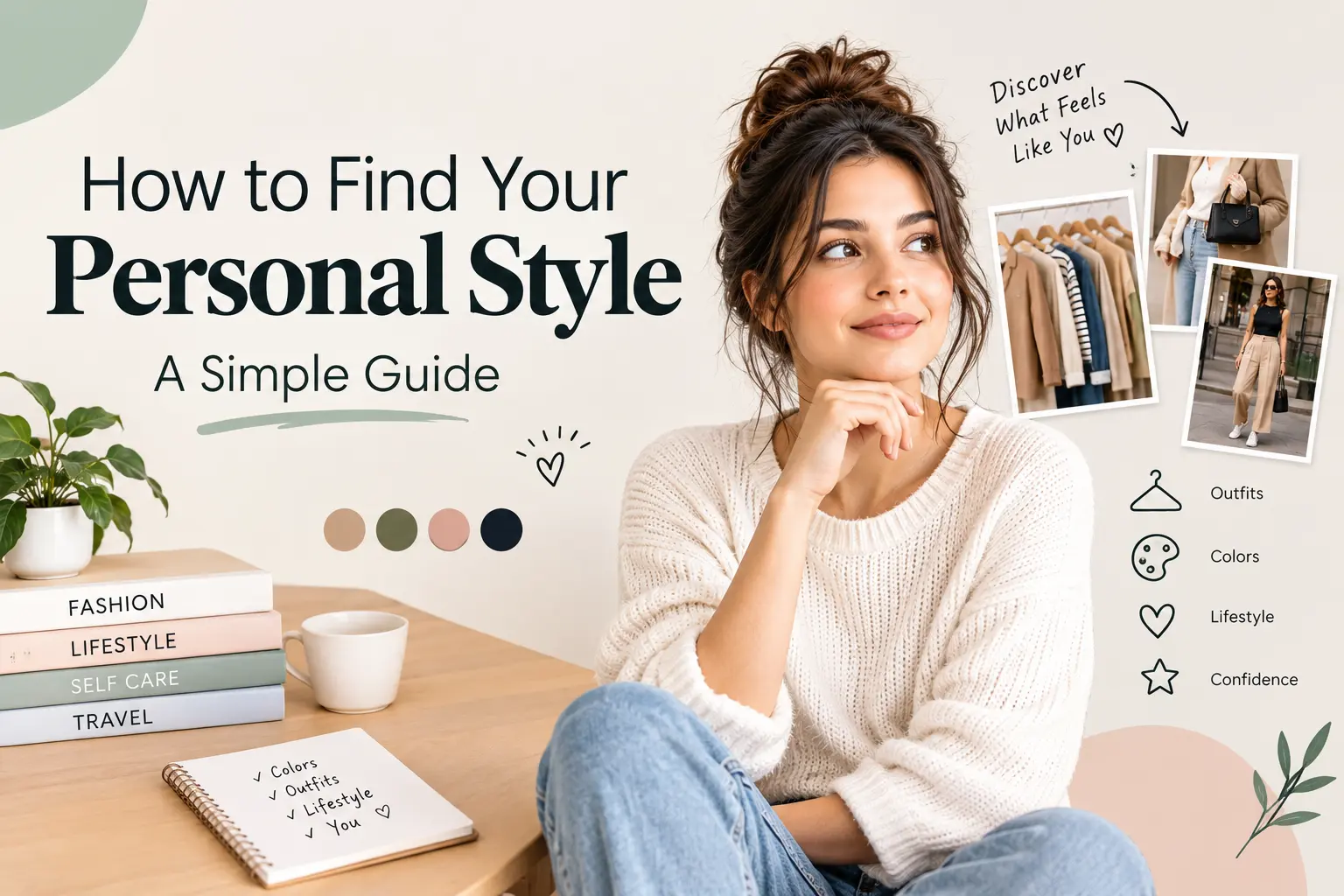


Fashion is not just about following the latest trends. It is also about expressing who you are through the clothes, colors, and accessories you choose. Finding your personal style can make getting dressed easier, help you shop more confidently, and create a wardrobe that feels authentic to you.
The good news is that you do not need to follow a specific fashion aesthetic. Your personal style can be casual, classic, minimalist, bold, sporty, vintage, or a combination of several different looks.
Here are some simple steps to help you discover your personal style.
1. Look at What You Already Wear
Start by taking a close look at your current wardrobe. Which clothes do you wear most often? Which outfits make you feel comfortable and confident?
Pay attention to patterns. You might discover that you prefer neutral colors, relaxed silhouettes, denim, tailored pieces, or statement accessories.
Your favorite existing outfits can provide useful clues about the style you naturally gravitate toward.
2. Create a Style Inspiration Collection
Look for outfits that you genuinely like on platforms such as Pinterest, Instagram, fashion websites, or magazines. Save pictures that catch your attention rather than choosing outfits simply because they are trending.
After collecting several images, look for common elements.
Do many outfits feature similar colors? Do you prefer oversized clothing or fitted silhouettes? Are you drawn to sneakers, boots, dresses, blazers, or simple basics?
These recurring details can help you identify your style preferences.
3. Identify Your Favorite Colors
Color plays an important role in personal style. Some people naturally prefer black, white, beige, and gray, while others enjoy bright colors and interesting combinations.
Take note of the colors you already wear frequently and the ones that make you feel good.
You can build a wardrobe around a few core colors and then add complementary shades. This makes it easier to mix and match your clothes without making every outfit feel identical.
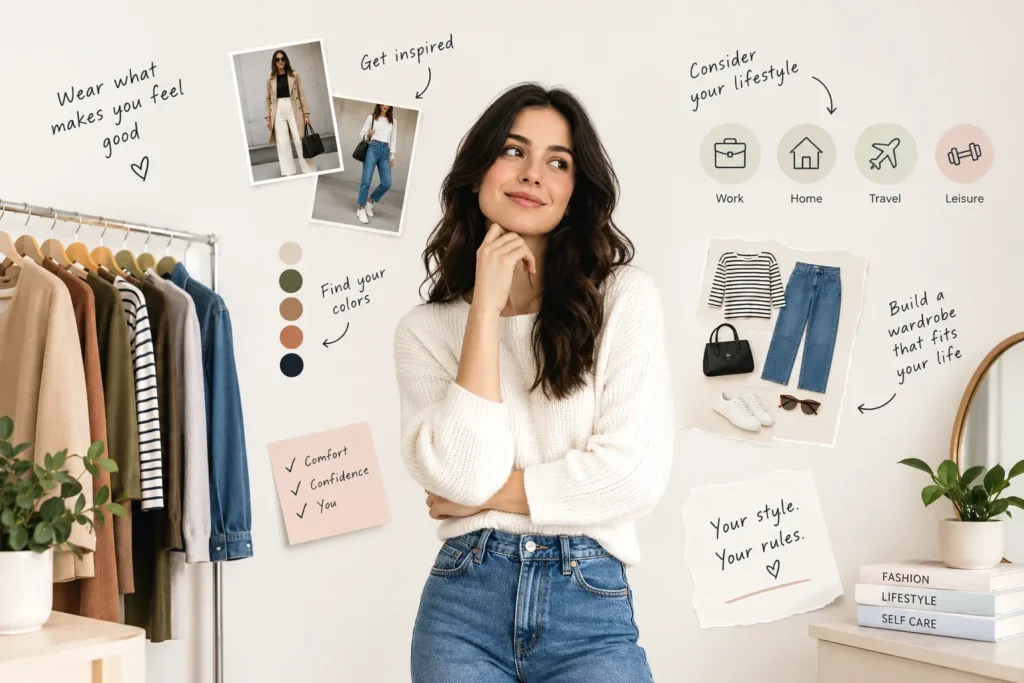
4. Think About Your Lifestyle
Your personal style should work with your everyday life.
Someone who works in a formal office may need more tailored clothing, while someone who works from home might prefer comfortable and casual pieces. If you travel frequently, practical and versatile clothing may be more useful.
Think about where you spend most of your time and what types of clothes you actually need.
A stylish wardrobe is much more useful when it fits your lifestyle rather than simply looking good in photos.
5. Focus on Fit
Even expensive or fashionable clothing may not look right if it does not fit properly.
Experiment with different cuts and silhouettes to discover what you feel most comfortable wearing. Try different lengths, proportions, and shapes instead of automatically choosing the same style every time.
Well-fitting basics can often become the foundation of a strong personal wardrobe.
6. Don’t Be Afraid to Experiment
Finding your style is a process, not a one-time decision. Try combinations that you would not normally wear.
You might discover that you like mixing casual and formal pieces, adding bold accessories to simple outfits, or combining different textures.
Give yourself permission to make mistakes. Not every experiment will become part of your permanent style, and that is completely normal.
7. Shop With a Clearer Strategy
Once you understand your preferences, shopping becomes easier. Instead of buying something simply because it is on sale or currently trending, ask yourself whether it fits your existing wardrobe.
Before purchasing a new item, consider whether you can create several outfits with it. Choosing versatile pieces can help you build a wardrobe that is both practical and stylish.
Final Thoughts
Finding your personal style is ultimately about discovering what makes you feel comfortable, confident, and like yourself. Trends can provide inspiration, but they do not need to define your wardrobe.
Start by examining the clothes you already love, collecting inspiration, identifying your favorite colors and silhouettes, and considering your lifestyle. Then experiment and gradually refine your choices.
Your personal style does not have to fit into one category. It can evolve as your lifestyle, preferences, and confidence change. The goal is not to dress like everyone else—it is to create a wardrobe that feels uniquely yours.