


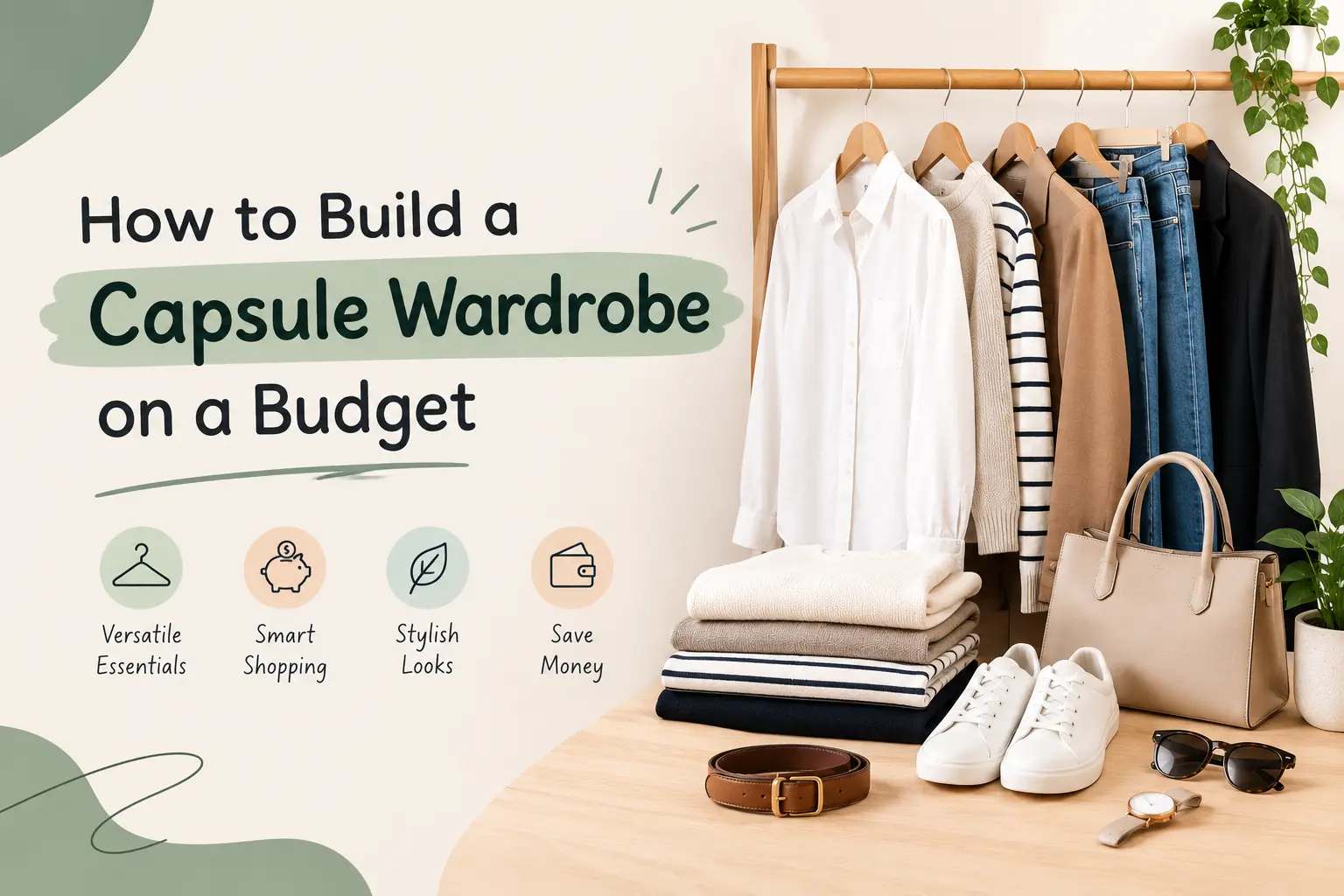



Building a stylish wardrobe doesn’t mean spending a fortune on clothes or following every fashion trend. With a little planning and a smart shopping strategy, you can create a versatile collection of clothing that looks great, feels comfortable, and works for different occasions.
A capsule wardrobe is a simple way to achieve this. It focuses on owning fewer, carefully selected pieces that can be mixed and matched to create multiple outfits. Whether you’re a student, a working professional, or someone looking to simplify your everyday style, a budget-friendly capsule wardrobe can help you save money while making getting dressed easier.
In this guide, we’ll explore how to build a capsule wardrobe on a budget without sacrificing style or quality.
What Is a Capsule Wardrobe?
A capsule wardrobe is a curated collection of clothing made up of versatile essentials that work well together. Instead of filling your closet with items you rarely wear, you focus on pieces that complement one another.
A typical capsule wardrobe may include basic T-shirts, jeans, trousers, a versatile jacket, comfortable shoes, and a few accessories. The exact number of items depends on your lifestyle, climate, personal preferences, and work requirements.
The goal isn’t to follow a strict clothing limit. It’s to make the most of what you own and buy fewer items that you’ll wear more often.
1. Start by Auditing Your Existing Wardrobe
Before buying anything new, take a look at the clothes you already own.
Empty your wardrobe and sort your clothing into three categories: items you wear regularly, items you occasionally wear, and items you no longer use.
Keep clothes that fit comfortably, suit your lifestyle, and can be combined with other pieces. Set aside damaged items for repair and consider donating or responsibly reselling clothes that are still in good condition but no longer suit you.
This step helps you identify gaps in your wardrobe and prevents unnecessary purchases.
Budget tip: Try creating at least five different outfits using your existing clothes before deciding what you need to buy.
2. Choose a Simple, Coordinated Color Palette
One of the easiest ways to build a versatile wardrobe is to choose colors that work well together.
Start with two or three neutral colors, such as black, white, navy, beige, grey, or brown. Then add one or two accent colors that reflect your personal style.
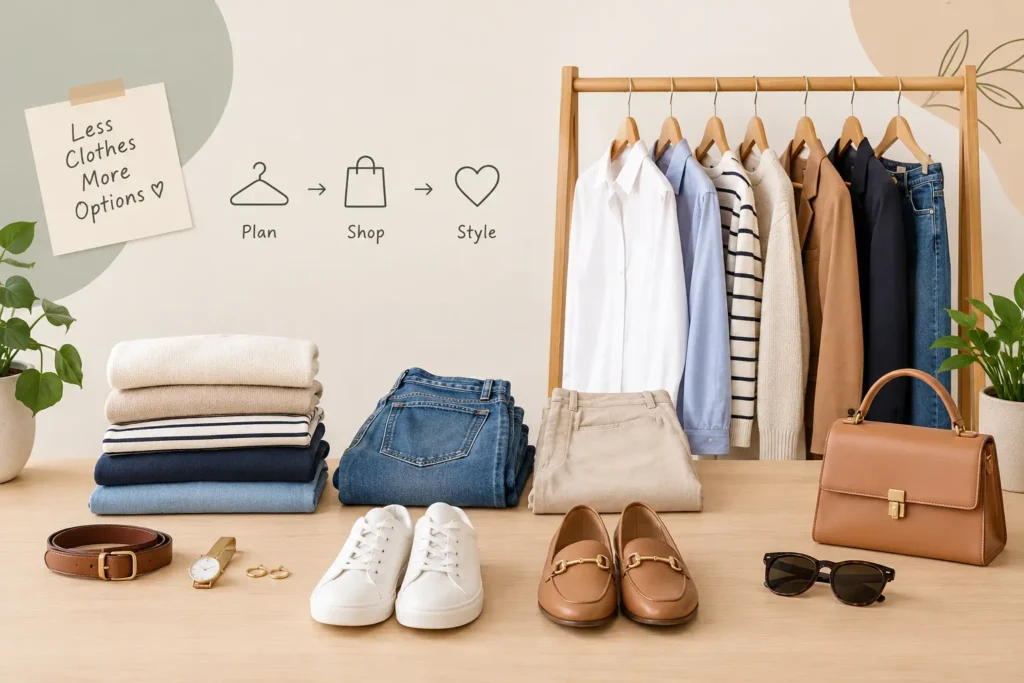
For example, a wardrobe built around navy, white, and beige can include a blue shirt, white T-shirt, beige trousers, and dark jeans. These pieces can be combined in several ways without requiring many additional items.
You don’t have to wear only neutral colors. The key is to select shades that complement one another so that more of your clothes can be mixed and matched.
3. Invest in Versatile Wardrobe Essentials
You don’t need an expensive designer wardrobe to look put together. Focus on practical basics that can be styled for different occasions.
Consider starting with these essentials:
- Tops: Two or three basic T-shirts, a button-down shirt, and a comfortable everyday top.
- Bottoms: One pair of well-fitting jeans, versatile trousers, and a skirt or additional pair of pants if suitable for your lifestyle.
- Layers: A cardigan, lightweight jacket, or blazer depending on your climate and daily needs.
- Shoes: Comfortable everyday sneakers and one additional pair of shoes for work or more formal occasions.
- Accessories: A belt, simple jewelry, or a versatile bag to change the look of an outfit.
Use this list as a starting point rather than a strict shopping checklist. If you already own some of these items, there’s no reason to replace them.
4. Set a Realistic Clothing Budget
Decide how much you can comfortably spend before shopping. Your budget should reflect your financial situation rather than a fashion trend or influencer recommendation.
For example, if your budget is ₹5,000, you could divide it into the following categories:
| Category | Example budget |
|---|---|
| Basic tops | ₹1,000 |
| Jeans or trousers | ₹1,200 |
| Layering piece | ₹1,000 |
| Shoes | ₹1,300 |
| Accessories or alterations | ₹500 |
| Total | ₹5,000 |
These are illustrative amounts, not current market prices. You can adjust the allocation based on what you already own and what you need most.
It’s also perfectly reasonable to build your capsule wardrobe gradually over several months rather than purchasing everything at once.
5. Shop Smart and Look for Quality
When shopping on a budget, the cheapest option isn’t always the best value. A garment that loses its shape after a few washes may cost more in the long run than a slightly more expensive piece that lasts longer.
Before buying an item, check the fabric, stitching, fit, care instructions, and return policy. Look for comfortable materials and construction that suit how frequently you plan to wear the garment.
You can save money by exploring end-of-season sales, outlet stores, secondhand shops, clothing swaps, and reputable online marketplaces.
However, avoid buying something simply because it’s discounted. A good deal is only worthwhile if the item fits your needs and you will actually wear it.
6. Prioritize Fit Over Fashion Trends
Clothes don’t need to be expensive to look good. Fit, comfort, and coordination often make a bigger difference than the brand name.
Choose clothing that allows you to move comfortably and suits your preferred silhouette. If an otherwise good item needs a small adjustment, affordable tailoring may help you get more use out of it.
Rather than purchasing trendy pieces that may quickly fall out of favor, choose styles you genuinely enjoy wearing. You can still incorporate trends through inexpensive accessories or one occasional statement piece.
7. Learn to Create More Outfits With Fewer Clothes
The real benefit of a capsule wardrobe comes from combining pieces creatively.
For example, a white T-shirt can be worn with jeans and sneakers for a casual day, with tailored trousers for work, or under a jacket for an evening outing.
Similarly, a button-down shirt can be worn on its own, layered over a T-shirt, or paired with different bottoms to create a new look.
Try photographing outfits you like or planning combinations at the beginning of the week. This makes getting dressed easier and helps you recognize which items offer the most versatility.
8. Maintain Your Clothes to Make Them Last
A budget wardrobe works best when you take care of the clothes you already own.
Follow washing instructions, avoid unnecessary high-heat drying, store knitwear carefully, and repair loose buttons or small tears before they become bigger problems.
Proper maintenance can extend the useful life of your clothing and reduce how often you need to replace items.
Final Thoughts
Building a capsule wardrobe on a budget is about making thoughtful choices, not giving up your personal style. By auditing your existing clothes, selecting a coordinated color palette, prioritizing versatile essentials, and shopping carefully, you can create a wardrobe that works for your everyday life without overspending.
Start small, focus on what you genuinely need, and add new pieces gradually. With time, you’ll have a collection of clothes that are easier to coordinate, more useful, and better suited to your budget.
Remember: A stylish wardrobe isn’t about owning more clothes. It’s about getting more value from the clothes you own.