

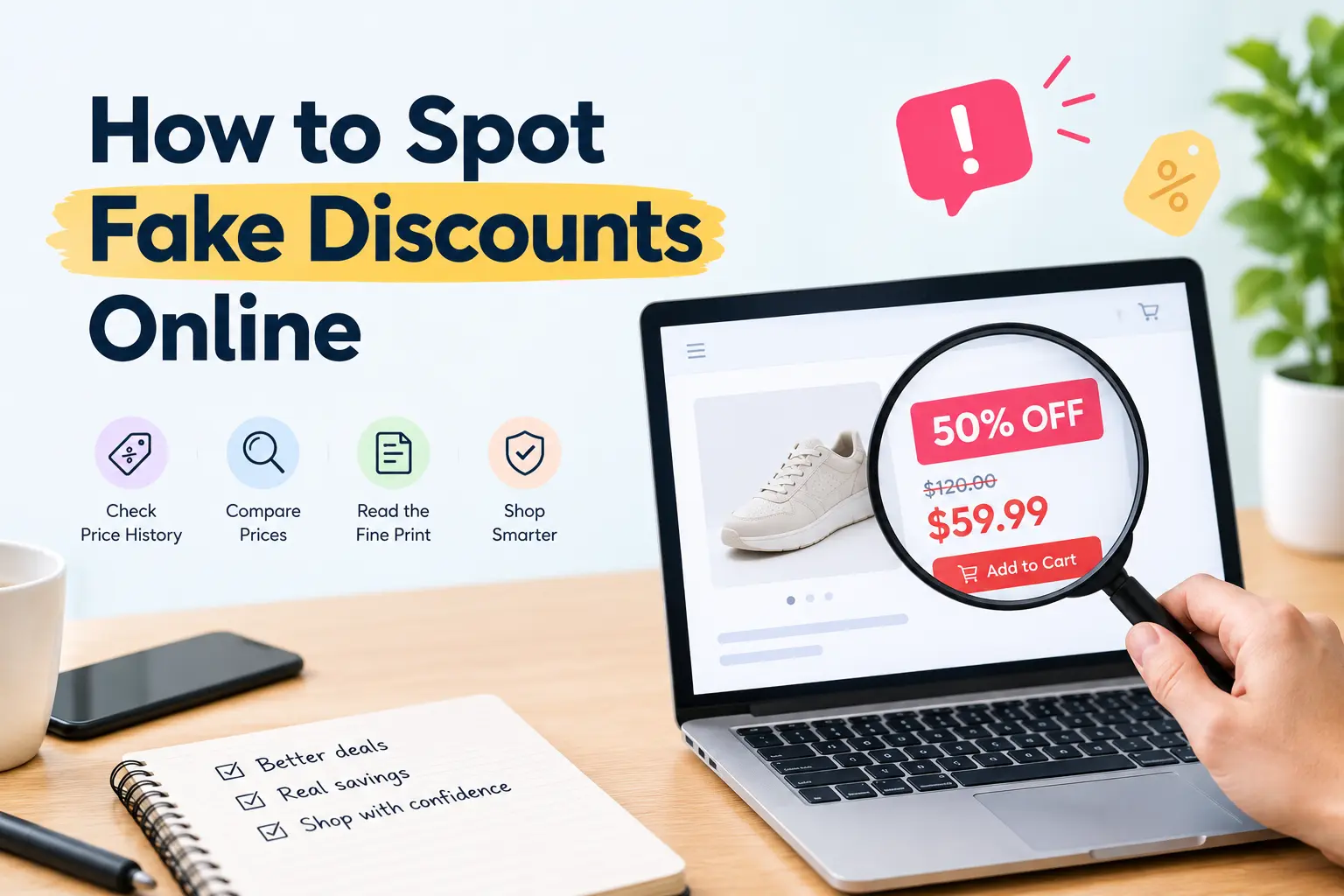



Online shopping has made it easier than ever to find products at competitive prices. From flash sales and limited-time offers to discount coupons and special promotions, shoppers are constantly presented with opportunities to save money. However, not every discount is as good as it looks. Some retailers use pricing tricks that make a deal appear bigger than it actually is.
Learning how to spot fake discounts online can help you make smarter purchasing decisions and avoid spending more than necessary.
What Is a Fake Discount?
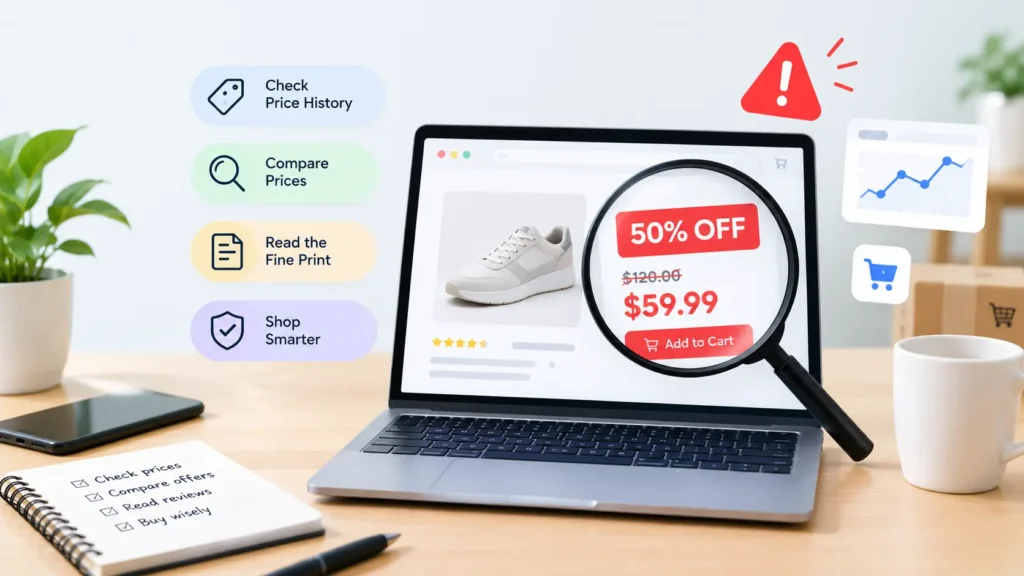
A fake discount is a promotion that gives the impression of a significant saving without actually offering much value. For example, a product may be advertised as “50% off” after its original price has been increased shortly before the sale.
Other misleading tactics can include inflated “original” prices, countdown timers, limited-stock messages, or discounts that only apply after purchasing additional products.
The goal is usually to create a sense of urgency and encourage shoppers to buy before they have time to compare prices.
1. Check the Price History
One of the easiest ways to verify a discount is to look at the product’s previous prices.
A product listed at $100 with a “40% discount” may seem like a great deal, but if it was regularly selling for $60 before the promotion, the discount isn’t particularly impressive.
Price-tracking websites and browser extensions can help you understand how a product’s price has changed over time. Checking price history is especially useful during major shopping events.
2. Compare Prices Across Multiple Stores
Don’t assume the first discounted price you see is the cheapest.
Search for the same product on several reputable websites and compare the final prices. Remember to consider shipping costs, taxes, membership fees, and other charges.
A product advertised at $80 with free shipping could ultimately be cheaper than one priced at $70 with expensive delivery fees.
3. Look Beyond the Percentage Discount
Large discount percentages are designed to attract attention, but the percentage alone doesn’t tell you whether you’re getting a good deal.
Instead of focusing on “60% OFF,” look at the actual amount you’ll pay and compare it with the product’s typical selling price.
A 10% discount on a product that is already competitively priced may be a better deal than a 50% discount based on an inflated original price.
4. Be Careful With Countdown Timers
Countdown timers are common on shopping websites. Messages such as “Only 2 hours left!” can create pressure to make a quick purchase.
However, some websites may repeatedly reset these timers or use them primarily as a marketing technique.
If you see a deal with an unusually aggressive countdown, take a moment to research the product before buying.
5. Check the Fine Print
Some discounts come with conditions that aren’t immediately obvious.
For example, a retailer might advertise a large discount but require you to:
- Spend a minimum amount
- Use a specific payment method
- Buy multiple products
- Subscribe to a membership
- Apply a coupon at checkout
Always read the terms and conditions to determine whether the advertised price actually applies to your purchase.
6. Watch Out for Suspicious Websites
Not every “deal” comes from a trustworthy retailer. Extremely low prices can sometimes be a warning sign of counterfeit products, scams, or fraudulent websites.
Before entering payment information, check the retailer’s reputation, contact information, return policy, and customer reviews. Be particularly cautious if a website offers prices that are dramatically lower than every other major retailer.
7. Ask Yourself If You Really Need It
Perhaps the simplest way to avoid a bad deal is to avoid unnecessary purchases.
A discount doesn’t automatically mean you’re saving money. If you spend $50 on something you didn’t need simply because it was advertised as 50% off, you’ve still spent $50.
Before clicking “Buy Now,” ask whether you would purchase the product at its normal price.
Conclusion
Fake discounts can make online shopping more confusing, but a little research can protect you from misleading offers. Check price history, compare multiple retailers, look at the final price, read the fine print, and avoid making rushed decisions because of countdown timers.
The best online deal isn’t necessarily the one with the biggest discount percentage. It’s the one that gives you genuine value for your money.